
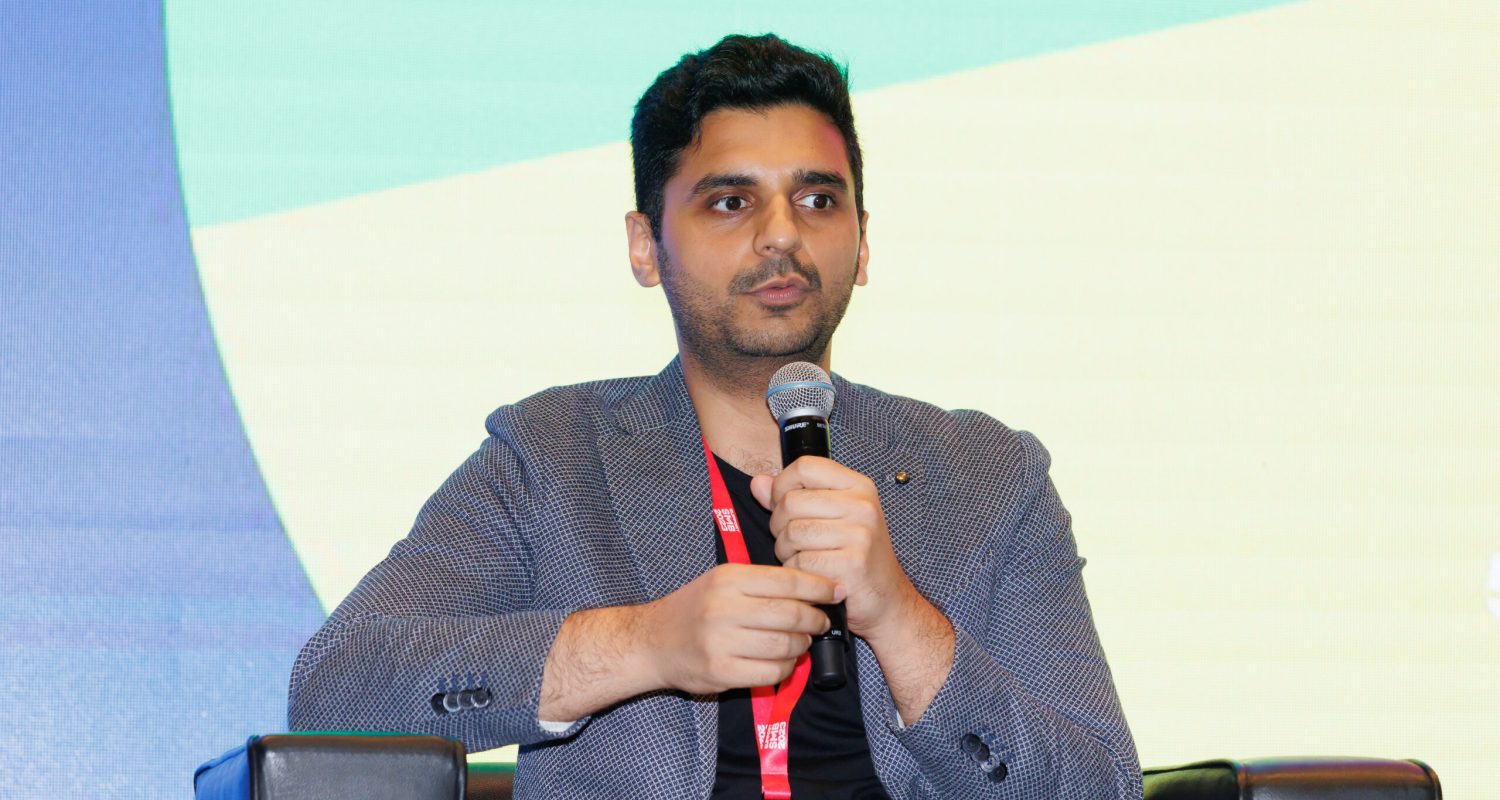

“Focus on what problem(s) is being repeated over and over again.”
Who is he?
Uzair Javaid is the co-founder and CEO of Betterdata. He has a PhD in Privacy Engineering and one of his projects involved breaking down the encryption of Ethereum blockchain. Uzair realised encryption has its vulnerabilities and there must be better alternatives. He then started to explore data privacy with AI and started Betterdata in early 2021 with his co-founder and CTO Kevin Yee.
Betterdata makes data sharing easy and instant for data science teams with synthetic data that looks and feels like real data. Since synthetic data is artificially generated, it does not belong to real customers and therefore, offers 100% compliance with data protection regulations globally.
Can you tell us why or what made you decide to enter the cybersecurity / data analytics sector?
“Right now, we are observing that majority of the companies are trying to be tech companies. For that, data is the main ingredient. However, increasing laws on AI and Data are making it difficult for companies to leverage data, derive value and insights, and generate new revenue. Our technology is poised to address this exactly, allowing companies to easily use their data without worrying about the ever-changing data and AI regulatory landscape.”
What is a typical morning at work?
“I wake up around 6am in the morning. Before I check anything, I go out to play badminton, get my breakfast and take a shower. After that, my time from 8-12pm is usually for clearing my emails as well as for meetings either online or offline.”
What are some of the challenges of the job?
“Since our focus is on data science teams, the sales cycle can be quite long; anywhere from 3-9 months. This is because, usually we have to do pilots with the customers first to demonstrate the value of synthetic data that we generate and how representative it is with their real datasets.
Secondly, we are a remote-first company, so managing our team can get tricky because of the time differences involved. We alleviate that by standardizing our communications as much as possible.”
How do you stay at the forefront of technological advancements and emerging trends in the industry?
“When we talk about synthetic data, most of the work in this domain started from literature in academia and then, it got commercialised. We have our own academic group focused on building AI models that currently do not exist as well as keep our finger on the pulse by reviewing the latest literature in a timely manner.”
Can you share examples of significant technological innovations or breakthroughs that you find particularly exciting or impactful?
“The technology we are building is about deep synthesis. Although we have been working on it since 2021, ChatGPT in 2023 put it on the radar of the world. I think ChatGPT has really shown the world what deep synthesis tech is capable of as well as its limitations.”
What are some of the main challenges or obstacles that you perceive in the adoption and implementation of new technologies?
“Tech landscape changes at a rapid pace and to continually improve, test systems to adopt new technologies as they come is a very complex yet important task. One of the main challenges is lack of expertise in understanding the tech and then implementing it.
Secondly, the ROI calculations of new tech can sometimes be quite difficult to achieve and involves many assumptions at times that may or may not be true.”
Are they specific domains or areas within the technology industry that you consider to have a substantial growth potential, and why?
“I am a big believer in privacy technologies and there are two key happenings here. One is that privacy laws are increasing and only going to get stricter over time. Businesses need to comply with them and still make money. Second is that customer awareness on privacy is also increasing and it has now started to affect their purchasing behavior.
This puts businesses in a dilemma, how can they make money, comply with data laws and still protect user privacy. All of these are going to keep changing as we become more and more digitally savvy. This is where privacy technologies take the spotlight and help businesses to achieve all these objectives.”
How do you foster a culture of innovation within your organisation and what practices do you employ to drive technological advancements?
“I like to make mistakes and dislike to repeat them as mistakes are lessons that will keep on repeating until you learn them. So in our company, we try to foster a culture where it is encouraged to make mistakes and discouraged to repeating them. This helps in learning new things, taking ownership and be independent of the outcome.”
From your perspective, what role does technology play in advancing sustainability and driving positive change?
“Technology is there to help humans, plain and simple. As long as it helps us in being more productive by automating repetitive tasks, facilitate us in our decision making, do basic chores/jobs for us and still allow the human to be in control, it will promote sustainability and eventually drive positive changes.”
What were some of the life lessons which you have learned along the way in your career?
“To sum that up, I will only say this. Play like you have never lost and practice like you have never won.”
If I was not in my current company / position, I would be a _________?
“Privacy engineer and researcher, most definitely.”
What advice would you give to individuals seeking to forge a successful career path in the cybersecurity / data industry?
“Start small, take one industry that you and only you are interested in (do not take trends into account here). Within that industry, you will find hundreds of use cases, pick only one that interests you or you think it interests you. Once you have that, start by working on it to explore its current landscape.
Focus on what problem(s) is being repeated over and over again. This may be found out via reading articles, blogs or simply talking to people working on that use case. Based on your findings, you will have a clear understanding now of what the landscape is, what is working and what is not working. Start dissecting what is not working and market yourself accordingly, be it for a job or starting your own company.”
Check out BetterData here.


