
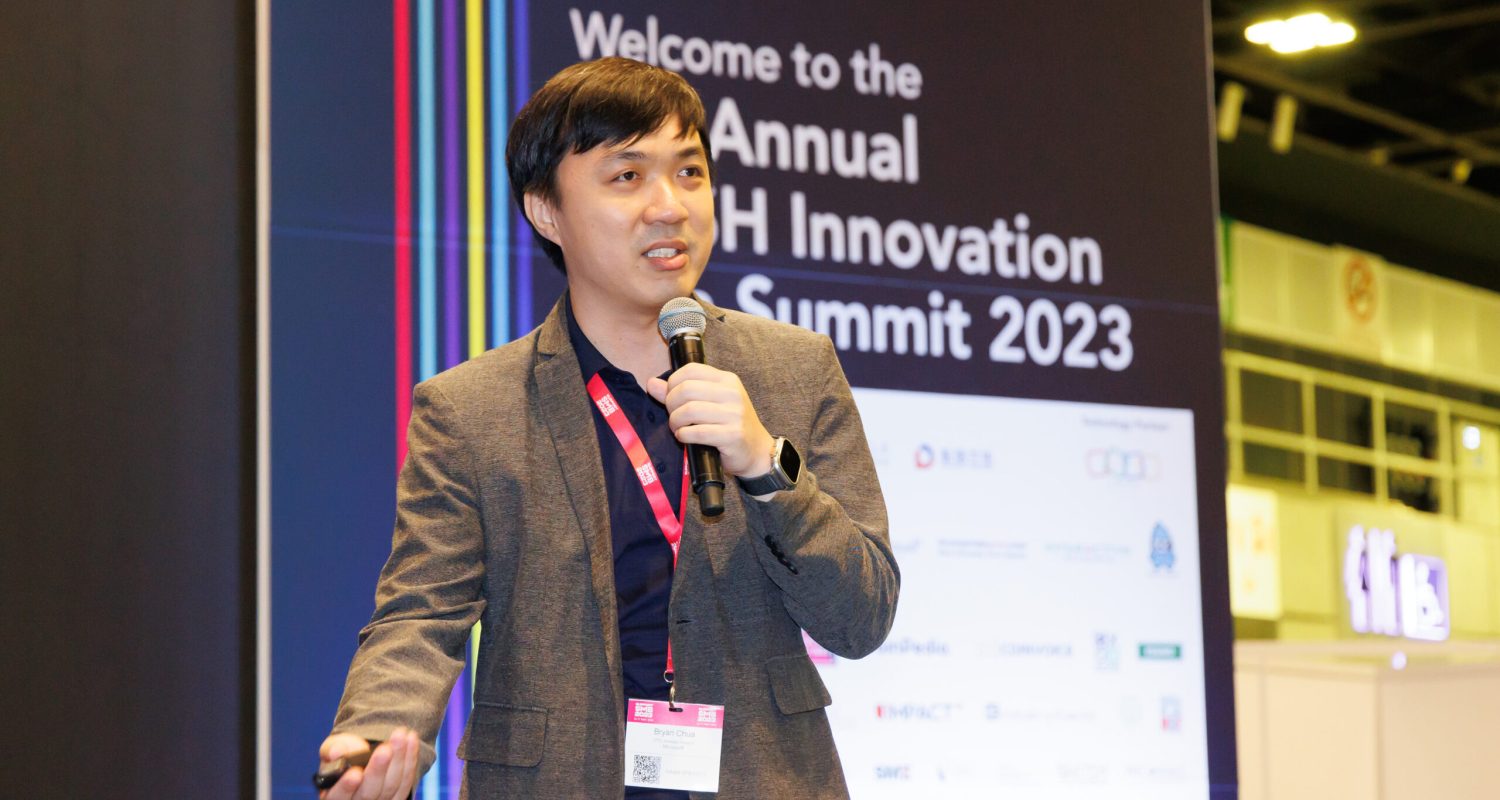

“Be open to new opportunities and embrace change. “
Who is he?
Bryan Chua serves as the Chief Technology Officer (CTO) for Strategic Enterprise Customers at Microsoft Singapore. In his role, Bryan has the opportunity to work closely with esteemed senior engineering leaders, including CTOs, Vice Presidents, and engineering managers.
His primary responsibility revolves around analysing the comprehensive needs, desired outcomes, and obstacles faced by his customers. By thoroughly understanding their unique challenges, Bryan provides strategic, technical, and engineering guidance to both their internal teams and valued customers.
Bryan actively engage with customers to identify opportunities for improvement and develop strategies to overcome any obstacles they may encounter. By leveraging on his expertise in both strategic planning and technical execution, Bryan helps customers unlock their full potential and achieve their business goals.
As the CTO for Strategic Enterprise Customers, he finds immense satisfaction in driving impactful transformations, harnessing the power of technology, and witnessing the positive impact it has on their customers’ success. Bryan is passionate about empowering organisations to embrace digital innovation, and continuously strives to provide them with the guidance and support they need to thrive in today’s rapidly evolving digital landscape.
Can you tell us why or what made you decide to enter the technology sector?
“I learnt coding since I was 16 and has been loving the technology space and the pace of innovations since then.”
What is a typical morning at work?
“After washing up, I usually will bring my kids to school and to have my first cup of coffee before reading any emails from Outlooks or messages from Microsoft Teams to look for any urgent matters.”
What are some of the challenges of the job?
“As a CTO for customer, one of the main challenges of the job is effectively navigating the intersection between people and processes. A significant portion of my time is dedicated to bridging the gap between customer business requirements and technology solutions. This involves understanding the unique needs and goals of our customers and finding ways to align their objectives with the capabilities of our technological offerings.
Additionally, staying abreast of the rapid pace of technological innovations presents its own set of challenges. It is crucial to continuously monitor and evaluate emerging technologies to determine their potential impact on our customers’ organizations. This requires a deep understanding of the capabilities and limitations of these innovations and how they can be harnessed to enhance or disrupt existing processes.
Another challenge lies in striking a balance between driving technological advancements and ensuring compatibility with existing systems and infrastructure. While it is essential to embrace innovation, it is equally important to consider the practical implications and potential risks associated with implementing new technologies. This requires careful planning, risk assessment, and effective communication to manage expectations and ensure a smooth transition.
Furthermore, the evolving nature of the technology landscape demands continuous learning and adaptation. Staying ahead of the curve requires investing time and effort in staying updated with the latest trends, industry standards, and best practices. This ongoing learning process helps in making informed decisions and maintaining a competitive edge in the ever-changing technology industry.”
How do you stay at the forefront of technological advancements and emerging trends in the industry?
“Firstly, I make it a point to subscribe to technology newsletters that provide weekly overviews of the latest developments. This helps me stay informed about the most recent advancements and trends in the industry.
In addition to newsletters, I actively engage in networking and knowledge-sharing with a group of like-minded friends and colleagues. We regularly communicate and exchange notes, discussing noteworthy updates and discoveries. This collaborative approach allows me to tap into diverse perspectives and insights, broadening my understanding of emerging technologies.
Furthermore, I proactively seek out opportunities for continuous learning and professional development. This includes attending industry conferences, webinars, and workshops, where experts and thought leaders share their expertise and shed light on emerging trends. These experiences not only expose me to cutting-edge innovations but also provide valuable networking opportunities.
Lastly, I stay curious and maintain a growth mindset. I actively explore technology-related publications, research papers, and online resources to delve deeper into specific areas of interest. By remaining open to new ideas and embracing lifelong learning, I ensure that I stay up-to-date with the latest technological advancements and emerging trends.”
Can you share examples of significant technological innovations or breakthroughs that you find particularly exciting or impactful?
“Certainly! One such innovation is the rise of generative AI, which has the potential to reshape various aspects of our lives, much like the impact of smartphones. Generative AI refers to the development of artificial intelligence systems that can autonomously create original and meaningful content. This technology has the power to transform industries and change the way we interact with technology, applications, and services.
For example, in the realm of healthcare, generative AI is revolutionizing medical research, diagnostics, and treatment. By analysing vast amounts of patient data, AI models can assist in early disease detection, personalized treatment plans, and drug discovery. This has the potential to improve patient outcomes and enhance the efficiency of healthcare delivery.
Generative AI also holds promise in natural language processing. Language models like GPT-3 can generate coherent and contextually relevant text, which has applications in automated content creation, chatbots, and language translation. This opens up opportunities for enhanced communication, information accessibility, and cross-cultural understanding within any company or industry!”
What are some of the main challenges or obstacles that you perceive in the adoption and implementation of new technologies?
“The adoption and implementation of new technologies can indeed present various challenges and obstacles. One of the primary hurdles is the fear of the unknown. Many individuals and organizations may feel hesitant to embrace new technologies due to uncertainty about their capabilities, potential risks, and how they themselves will fit into existing workflows.
To address this challenge, it is crucial to invest time and effort in educating and familiarizing people with the new technologies. Investing in training, workshops, and resources that demonstrate the practical use cases and benefits can help alleviate fears and build confidence in the adoption process. By offering clear explanations and highlighting the positive impact that the technology can have, individuals are more likely to embrace it.
Furthermore, starting small with a proof of concept can be an effective strategy. By initiating a pilot project or a limited-scale implementation, organizations can showcase the tangible benefits and demonstrate the feasibility of the technology in a real-world scenario. This approach allows users to experience the advantages first-hand and provides them with a sense of achievement and motivation for the organisation and teams to explore further.
It is also important to foster a culture of collaboration and feedback for other team members within the same organisation. Like any product developments, encouraging users to provide their insights, suggestions, and concerns creates a feedback loop that allows technology providers to continuously improve their solutions. Actively engaging with users, gathering their feedback, and addressing their needs helps refine the technology and ensures that it evolves to meet the requirements of the users effectively.”
Are there specific domains or areas within the technology industry that you consider to have a substantial growth potential, and why?
“I believe that all domains and areas within any technology industry have substantial growth potential. I would like to highlight the importance of people and their involvement in driving that growth. Technologies, in essence, are tools that enable individuals and teams to unlock their potential and achieve remarkable outcomes.
In today’s rapidly evolving world, there are several trends and areas that are particularly promising and have the potential for significant growth. However, it is important to note that these trends are not limited to specific domains but rather encompass a wide range of industries and sectors.
One such area is artificial intelligence (AI) and machine learning (ML). The ability of AI and ML to analyze vast amounts of data, derive meaningful insights, and automate complex tasks has immense potential for transformative impact across industries. From healthcare and finance to manufacturing and transportation, AI and ML are revolutionizing processes, enhancing decision-making, and driving innovation.
Another area of substantial growth potential is the Internet of Things (IoT). As more devices become connected and generate massive amounts of data, the IoT presents opportunities for improved efficiency, enhanced customer experiences, and the development of new business models. Industries such as smart homes, healthcare, logistics, and agriculture are already leveraging IoT technologies to optimize operations and deliver value-added services.
Cloud computing is another domain with significant growth potential. The ability to store, process, and access data and applications remotely has revolutionized the way businesses operate. Cloud computing offers scalability, flexibility, and cost-efficiency, enabling organizations to focus on their core competencies and innovate at a faster pace.
Cybersecurity is also a critical area that continues to experience growth. As technology advances, so do the risks associated with cyber threats. Organizations across industries are investing heavily in robust cybersecurity measures to protect their data, systems, and customers. The increasing adoption of cloud services, IoT devices, and interconnected systems has heightened the need for advanced security solutions.
Ultimately, it is the people behind these technologies and their ability to adapt, innovate, and seize opportunities that will drive substantial growth in any domain or area within the technology industry. The willingness to embrace change, collaborate, and explore new possibilities will be key factors in unlocking the full potential of emerging technologies and shaping the future of the industry.”
How do you foster a culture of innovation within your organisation and what practices do you employ to drive technological advancements?
“At Microsoft, fostering a culture of innovation is deeply ingrained in our organization. We embrace a growth mindset and employ several practices to drive technological advancements and encourage innovation.
One of the key practices we follow is actively listening to our customers. By understanding their needs, pain points, and aspirations, we can tailor our technological advancements to provide meaningful solutions. Through regular interactions, feedback sessions, and customer engagements, we gain valuable insights that shape our innovation efforts.
Another practice we employ is continuous learning. Our organization recognizes the importance of staying updated with the latest technologies and industry trends. We have dedicated learning Fridays where employees come together once a month to explore new topics and technologies. This commitment to ongoing education and skill development enables us to stay at the forefront of innovation and leverage emerging technologies effectively.
Additionally, Microsoft embraces change as an integral part of our business. We understand that technology is ever-evolving, and our ability to adapt and grow alongside it is crucial. We invest in understanding how people change and grow, both internally within our organization and externally with our customers. This understanding helps us develop technologies that align with evolving user needs and drive technological advancements that make a positive impact.
Furthermore, collaboration and cross-functional teamwork play a vital role in fostering innovation. We encourage open dialogue, knowledge sharing, and interdisciplinary collaboration across teams. By breaking down silos and promoting a collaborative environment, we enable diverse perspectives and expertise to converge, leading to breakthrough innovations and technological advancements.
At Microsoft, we also emphasize the importance of experimentation and taking calculated risks. We have a culture that encourages employees to explore new ideas, prototype innovative solutions, and learn from failures. By providing a supportive environment for experimentation, we foster a sense of entrepreneurial spirit and encourage individuals to push boundaries and drive technological advancements.”
From your perspective, what role does technology play in advancing sustainability and driving positive change?
“From my perspective, technology has a transformative impact on advancing sustainability and driving positive change in various ways. At Microsoft, we recognize the critical role that technology plays in addressing environmental and social challenges while promoting inclusive and sustainable development.
One key aspect is improving energy efficiency. Technology enables the development of innovative solutions to optimize energy consumption, monitor and manage resources, and promote renewable energy sources. By leveraging intelligent systems, data analytics, and automation, businesses can reduce their carbon footprint and contribute to a more sustainable future.
Another area where technology drives positive change is waste reduction and resource management. Through advancements in areas like circular economy, Internet of Things (IoT), and artificial intelligence (AI), companies can optimize resource utilization, minimize waste generation, and improve recycling and repurposing practices. These technologies enable more efficient supply chains, smarter waste management systems, and the development of sustainable products and services.
Moreover, technology plays a crucial role in enhancing accessibility to resources and services. Digital solutions enable remote collaboration, telecommuting, and e-learning, reducing the need for extensive travel and infrastructure. This not only improves convenience but also reduces carbon emissions associated with transportation and infrastructure development.
Furthermore, technology contributes to environmental monitoring and conservation efforts. Remote sensing, data analytics, and machine learning enable the collection and analysis of environmental data on a large scale. This data can be used to monitor biodiversity, track climate patterns, and inform sustainable land and resource management practices.
At Microsoft, we are committed to developing technologies that are inclusive, trusted, and sustainable. By integrating sustainability considerations into our product design, we enable our customers to leverage technology to enhance their operational efficiency and reduce their environmental impact. We strive to empower organizations to adopt sustainable practices, optimize their resource utilization, and contribute to positive change.”
What were some of the life lessons which you have learned along the way in your career?
“Throughout my career, I have learned several valuable life lessons that have shaped my perspective and approach to work and personal life. Here are three key lessons that I consider significant:
Lesson number one – Life is unpredictable, so make the most of your time while you’re awake. I’ve come to realize that time is a precious resource that should be used wisely. Embracing the uncertainty of life and recognizing that each moment is fleeting encourages me to prioritize meaningful tasks, set clear goals, and make the most of every opportunity. It reminds me to be present, stay focused, and be proactive in pursuing my aspirations.
Lesson number two – Family is of utmost importance. It’s essential not to neglect them while pursuing our dreams or building a career. In the pursuit of professional success, it’s crucial to maintain a healthy work-life balance and allocate quality time for loved ones. Nurturing and strengthening relationships with family members not only brings fulfilment but also provides a strong support system during both triumphs and challenges.
Lesson number three – Understanding my boundaries and limits keeps me humble, motivated, and focused on my goals. Recognizing your strengths and weaknesses allows you to make realistic assessments of your abilities. By acknowledging limitations, you can seek growth opportunities and collaborate with others to complement your skills. Setting boundaries also helps maintain a healthy work-life balance, prevents burnout, and enables you to perform at your best in both personal and professional spheres.
These lessons have guided me to navigate challenges, embrace opportunities, and strive for personal growth. They remind me of the importance of time, the value of relationships, and the significance of self-awareness. Incorporating these principles into my career and personal life has brought me a sense of fulfilment, resilience, and a greater appreciation for the journey itself.”
If I was not in my current company / position, I would be a _________?
“Technology advisor and mentor.”
What advice would you give to individuals seeking to forge a successful career path in the technology industry?
“When it comes to forging a successful career path in the technology industry, I would offer the following advice:
1. Be open to new opportunities and embrace change: The technology industry is constantly evolving, and being adaptable is crucial. Embrace new technologies, trends, and challenges that come your way. Stay curious and continue to learn and acquire new skills. The ability to adapt to change and stay ahead of the curve will set you apart and open doors to exciting opportunities.
2. Define your goals and stay focused: While being open to new possibilities, it’s important to have a clear vision of what you want to achieve in your career. Set specific, measurable goals and develop a roadmap to guide your journey. By maintaining focus on your objectives, you can make informed decisions and pursue opportunities that align with your long-term aspirations.
3. Cultivate a growth mindset: Embrace a mindset that embraces learning, resilience, and continuous improvement. View challenges as opportunities for growth and see setbacks as valuable learning experiences. Seek feedback and constructive criticism, and use it to enhance your skills and knowledge. A growth mindset will help you adapt to new technologies, overcome obstacles, and continually evolve in your career.
4. Build a strong professional network: Networking is crucial in the technology industry. Seek out opportunities to connect with industry professionals, attend conferences, join online communities, and engage in relevant forums. Building relationships with like-minded individuals and industry experts can provide valuable insights, mentorship, and potential career opportunities.
5. Take calculated risks: Don’t be afraid to step out of your comfort zone and take calculated risks. Pursue challenging projects, seek opportunities for innovation, and embrace leadership roles when they arise. Stepping into the unknown can lead to personal and professional growth, and help you develop new skills and experiences that propel your career forward.
6. Cultivate strong communication and collaboration skills: In the technology industry, effective communication and collaboration are essential. Work on improving your interpersonal skills, both written and verbal. Learn to articulate your ideas clearly, actively listen to others, and collaborate with diverse teams. Strong communication skills will help you navigate complex projects, build relationships, and become a more effective leader.
7. Stay ethical and maintain integrity: The technology industry operates in a landscape of ever-increasing responsibility. Maintain a strong ethical compass and prioritize integrity in all your professional endeavours. Uphold the highest standards of professionalism, respect intellectual property, and prioritize data privacy and security. Your reputation for ethical conduct will be invaluable as you progress in your career.”
Check out Microsoft here.


